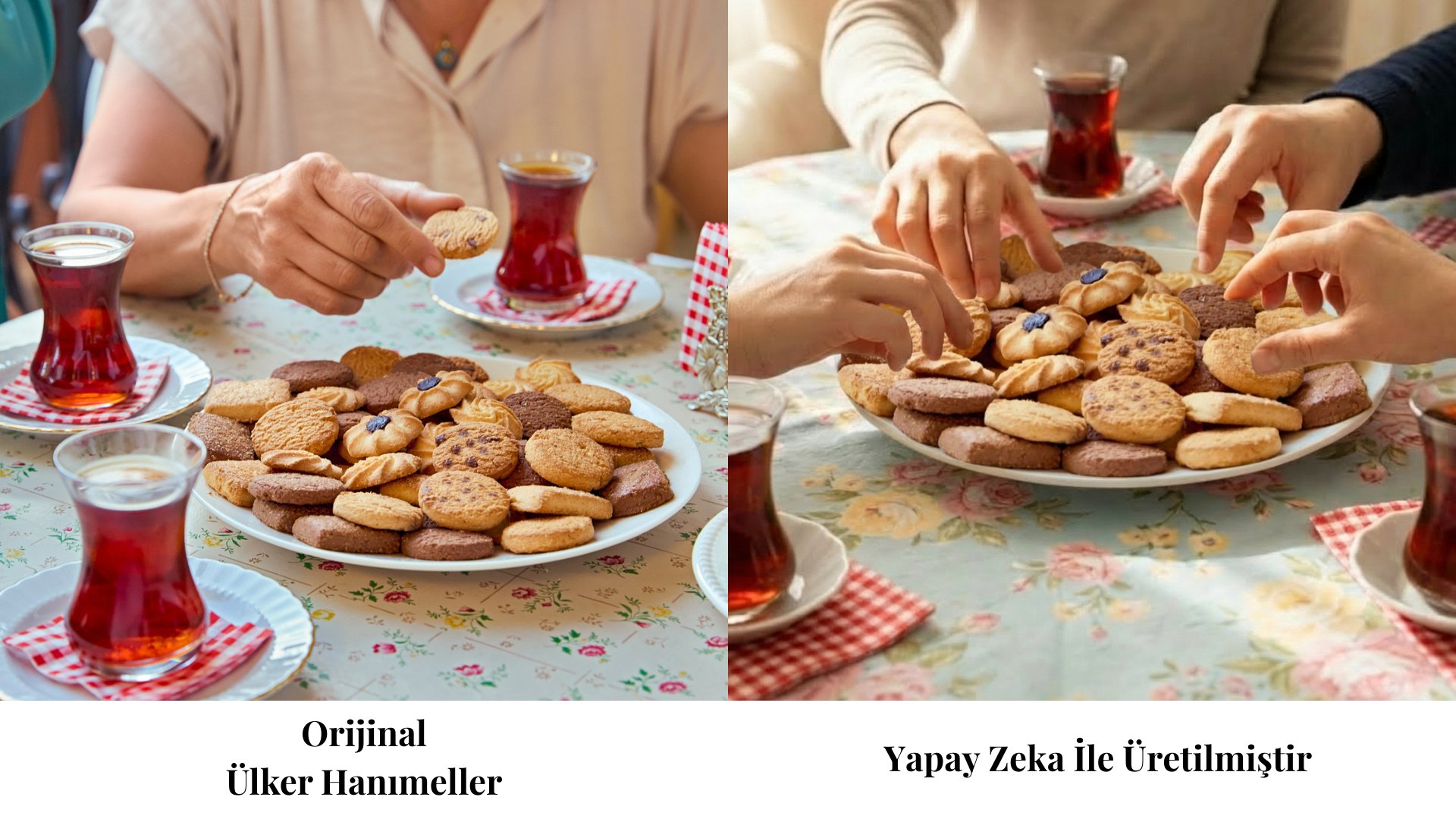
At PAM Istanbul we know gastronomy is never just a plate. It's a preparation, a play of light, and above all a question of timing. To carry that moment into a digital frame you need both a real studio and smart tools.
The digital mathematics of a plate: why looking "nice" isn't enough
For a long time, food photography chased flawlessly styled plates. Every garnish placed with a ruler, every drop of sauce accounted for. But the modern viewer no longer responds to images that look "too perfect" and therefore distant. The 2026 aesthetic asks for reality and freshness rather than perfection.
Think about it. The hero shot for a restaurant menu has to pull the visitor in the moment they turn the page. A hotel breakfast photo has to get someone out of bed on an empty stomach. A gourmet plate needs a first second strong enough to stop the scroll on social media. That isn't technical quality. It's sensory force.
Making someone feel the steam off a dish has little to do with the camera's raw power. It depends on the angle of light that steam meets, the depth of the backdrop behind it, the digital texture wrapped around it. A breakfast plate planned for morning service should be shot at 09:00, because no artificial source imitates the natural light of that hour. For us a gastronomy project is the work of translating a product's flavour codes into a visual language.
Why real capture is non-negotiable: steam, moisture, texture, freshness
Food images generated with AI tools get better every month, and we'll say that plainly. But there's one problem they still haven't solved: reproducing physical, split-second reality.
Picture butter melting on bread fresh out of the oven. Or steam curling up off the surface of a hot soup. The instant two droplets of moisture on a piece of fruit touch and merge. These aren't static states, they're momentary physical events. For now AI can't "generate them from nothing" — but it can process them very effectively when it has data from a real shoot to work with.
That's why reversing the order is dangerous in food work. Real food, real set, real light first. AI after. Flip that sequence and the result, however technically perfect, won't trigger the appetite response in the viewer's brain.
PAM AI-LAB: the technology behind an appetising pixel
Rather than bolting a cold layer of technology onto food production, AI gives us a near-unlimited lab for catching that freshest moment and spinning dozens of uses out of it. With the processes we've built inside PAM AI-LAB, we get past the physical limits of a traditional shoot.
Hyperrealism and the perception of freshness
A water droplet on a vegetable, the crumb of bread just out of the oven — these details disappear in seconds. AI-LAB lets us optimise those critical frames with mathematical precision. Our algorithms push the visual cues that trigger a "fresh" signal in the viewer's brain to their limit, without breaking the product's natural palette or texture. The result is a sensory echo the viewer pulls from their own memory, what marketers call appetite appeal.
Atmosphere and sensory storytelling
Gastronomy isn't only about the food. It's about where the food is eaten. Working with brands like Starbucks, San Pellegrino and Içim, our focus is putting the product in the right context. With AI-LAB we can stage the coolness of a drink against the Mediterranean morning light, or the warmth of a coffee in the right late-afternoon tone, without running into logistics. From a single real product shoot we move to a summer terrace for the summer campaign and a stone fireplace for the winter one.
AI tools in food photography: where they help, where they fall short
This deserves an honest answer, because the industry is full of misleading claims. AI tools genuinely help food photography in a few areas.
Background swaps and seasonal variations: you can reuse a studio frame to show the same product in different settings. A box of chocolates can appear both as a winter gift and in a spring picnic, with no reshoot.
Menu mockups and presentation material: when a restaurant is preparing a seasonal menu, adapting existing product photos into different presentation formats is far more practical than reshooting everything.
And then there's where it doesn't work. Producing the texture of a real dish from scratch — the brittleness of a fried surface, the gloss of a juicy fruit — still doesn't convince. Steam and smoke effects are AI's weakest area. Colour accuracy, especially the reds of meat and the yellow of olive oil, still needs careful post-production.
The PAM Istanbul approach: a hybrid model for food shoots
On food projects we follow a strict order: real first, smart second. For every project we do the physical studio shoot first; we pick the lens that presents the dish best, set the light direction and the composition. Here our photographer works the light and the food stylist brings the plate to its final form. None of that decision-making is something AI can do.
Once the real shoot is done, AI-LAB comes in. From a single strong studio frame we generate seasonal variations, adapt to different platform formats (Instagram square, story, billboard, web banner) and extend the work while keeping the brand's visual language intact. Take a breakfast shoot we did for a hotel chain: 20 studio frames became 80 different usable formats after AI-LAB processing. A quarter of the budget, four times the output.
The takeaway: not good-looking plates, but work you can taste
The gastronomy narrative of the future will be a digital experience that moves every sense, not only the eye. At PAM Istanbul we combine the aesthetics of traditional food culture with the data-driven power of AI. But our core principle doesn't change: real food, a real moment, a real feeling — technology is built on top of that moment, not in place of it.
Because we know a good food image doesn't just open an appetite. It builds a lasting flavour memory around the brand.
Talk to us about your gastronomy project · [email protected] · +90 530 267 49 29 · Yayıncılar Sok. 10/3, Seyrantepe · Istanbul