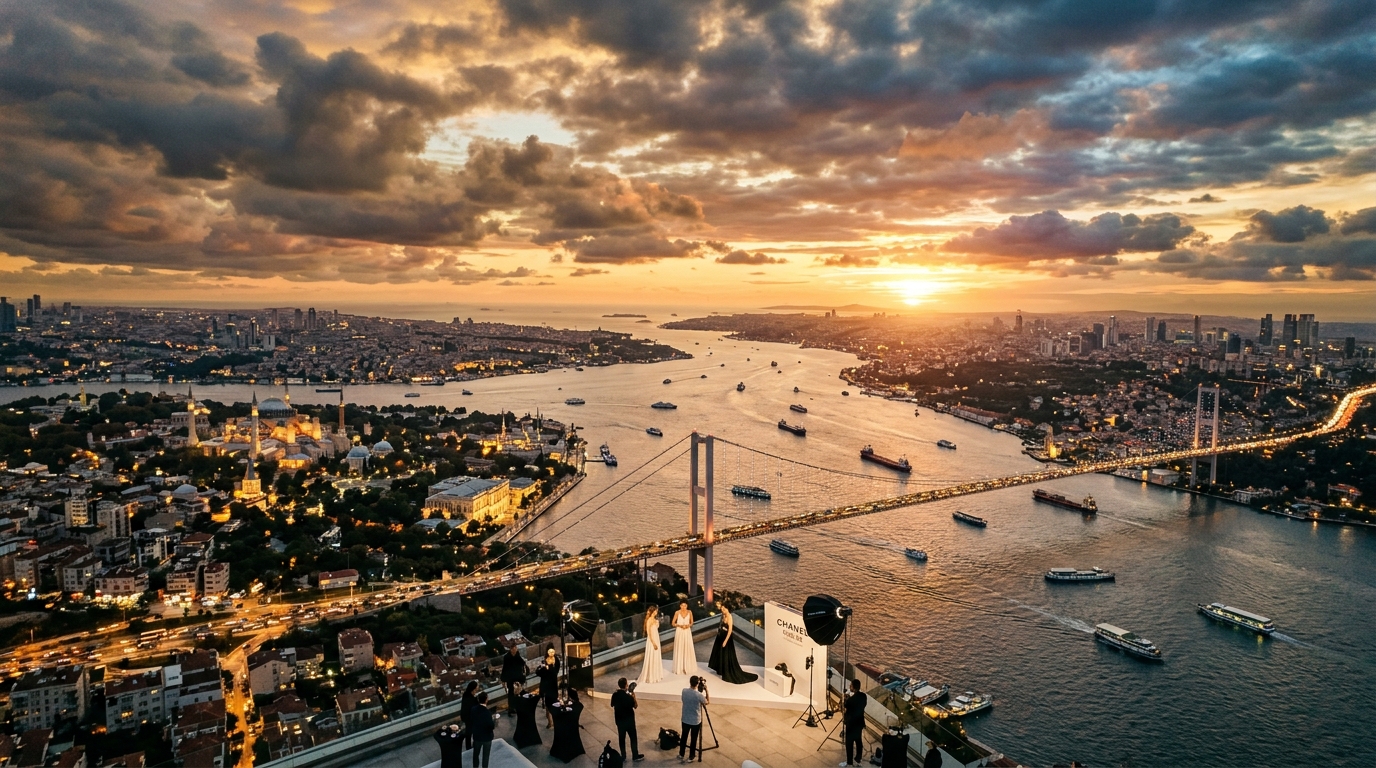
Every client asks the same question on the first call: how long will this take? The honest answer is always "it depends," but that's useless if you're planning a launch or a media buy that has to hit air on a fixed date. So here are real numbers. Below is how a TV commercial actually moves through production, stage by stage, with the weeks each phase tends to eat.
The short answer: 6–10 weeks
For a standard TVC, meaning one hero spot with a handful of cutdowns, a shoot day or two, and moderate post, plan for 6 to 10 weeks from approved brief to final delivery. Simple spots with a locked concept can land in 3–4 weeks. Ambitious productions with celebrity talent, built sets, or heavy VFX routinely run 12 weeks or longer. The variable isn't the shoot. The shoot is almost always the shortest part. It's everything around it.
Stage-by-stage timeline
1. Brief & concept — 1 to 2 weeks. This starts the moment the brief is signed off. The agency or production team develops the creative idea, writes the script, and builds one or more treatments to pitch. Expect a round or two of revisions before the concept is locked. Rushing this stage is the most expensive mistake you can make, because everything downstream is built on it.
2. Pre-production — 2 to 3 weeks. This is where the calendar quietly disappears. Casting and callbacks, location scouting and permits, set design, wardrobe, props, storyboarding, the shot list: it all happens here. Bookings for crew, gear and talent get locked. A pre-production meeting (PPM) with the client signs off every creative and logistical detail before anyone steps on set. When public locations are involved, permits alone can take a week or more.
3. The shoot — 1 to 3 days. Yes, days, not weeks. A tight commercial is often a single shoot day. A bigger spot with multiple setups or locations runs two to three. Per hour, this is the most visible and most expensive part, which is exactly why the weeks of prep exist: so the shoot day runs like clockwork and nothing gets figured out on the fly.
4. Post-production — 2 to 3 weeks. Editing, sound design, music licensing, colour grading, VFX and graphics all live here. The first cut usually comes within a few days, then the revision rounds begin. Each client review adds days to the calendar, so post time scales with how many rounds of feedback the approval chain wants. Heavy VFX or animation can push this to four weeks or beyond.
5. Delivery & versioning — 2 to 5 days. The final master gets exported to broadcast spec, then versioned: 30s, 20s, 15s and 6s cutdowns, plus 16:9, 1:1 and 9:16 aspect ratios for social. QC, legal clearance and delivery to broadcasters or platforms round it out. It's short, but it's real, and it always seems to land under deadline pressure.
What stretches the timeline
Three things blow up schedules more than anything else. Approval cycles: every extra round of client feedback, on the concept, the edit, the grade, adds days, and they compound. A production with four stakeholders who all want changes will always run longer than one with a single decision-maker. Casting and locations: the right face and the right place are worth waiting for, but callbacks, availability and permits sit outside your control. Scope: practical effects, animals, kids, water, night shoots and VFX-heavy concepts each add prep and post time. Weather on an exterior shoot can cost you a day you can't get back.
Where AI is speeding things up
In 2026, AI compresses specific stages rather than the whole pipeline. Concept & previz: AI-generated moodboards, animatics and style frames turn a two-week concept phase into days, and give clients something moving to react to far earlier. Post: AI-assisted rotoscoping, upscaling and rough-cut assembly shave time off the longest tail of the schedule. Fully AI-generated spots: for the right brief, a commercial built with AI video tools skips the shoot entirely, no crew, no location, no weather, and can go from concept to delivery in days. What AI doesn't speed up is human sign-off. Approval cycles are still the real bottleneck.
Can you do it faster? The emergency timeline
Yes, an urgent TVC is possible. With a pre-approved concept, a lean crew, a single shoot day and a client who can approve fast, a straightforward spot can be shot and delivered in 2 to 3 weeks. An AI-assisted or fully AI-generated spot with no live shoot can turn around in a few days to a week. The catch never changes: speed costs either money (rush fees, overtime, parallel workflows) or fidelity (fewer options, tighter margins for error). A rushed timeline is doable. It just needs a decisive client and a team that plans for it from day one.
Let's build it together.
We've been producing commercial film and photography since 2018, and for the last three years we've been integrating AI into our workflow. We mentor your team as we produce: transparent process, documented decisions, no black box. We set up your brand's AI production together, built for sustainable growth.
Email: [email protected]
Phone: +90 530 267 49 29
Studio: Yayıncılar Sok. 10/3, Seyrantepe · Istanbul