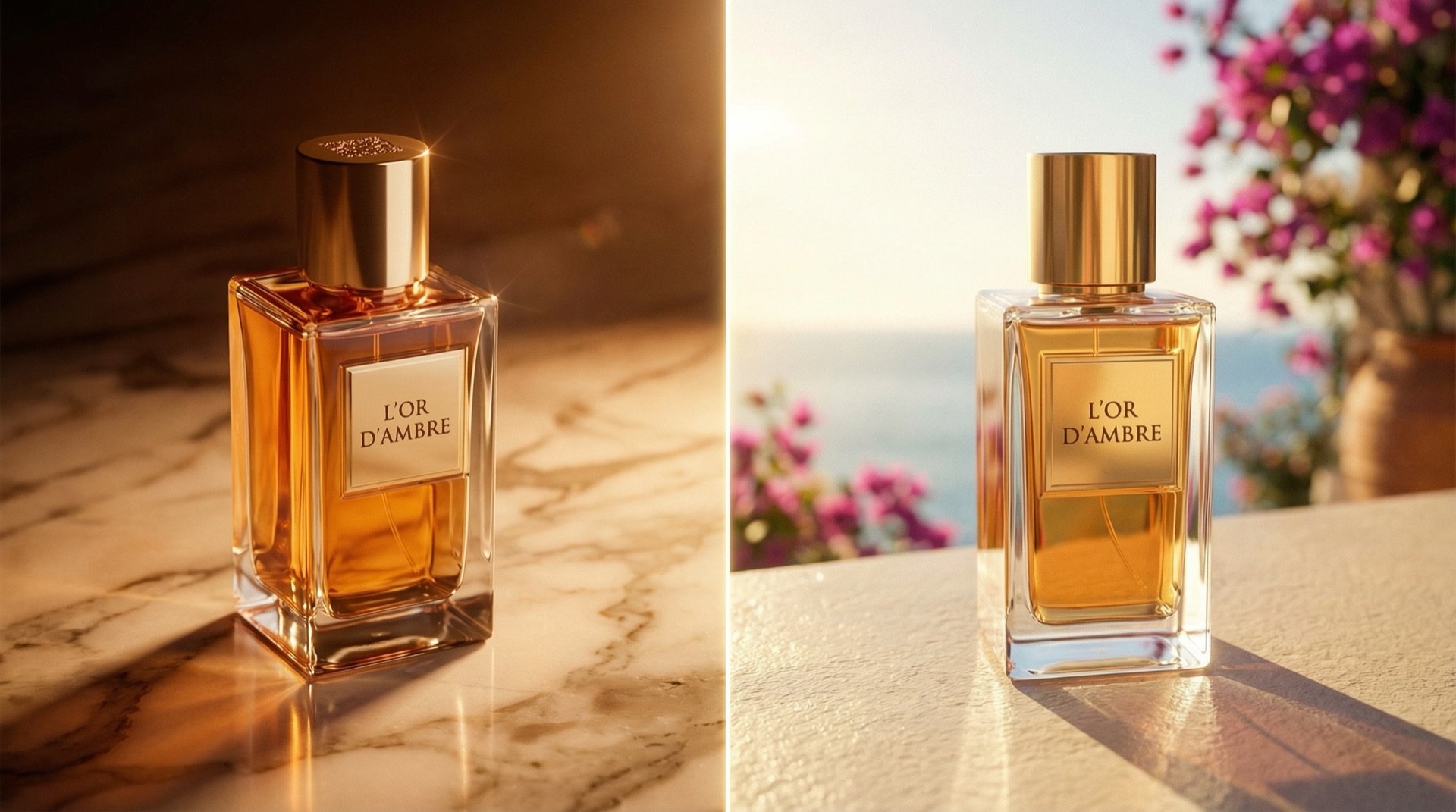
In e-commerce, product imagery is a conversion decision. From Trendyol to Amazon, from your own website to your Instagram shop, buyers form a purchase judgement from the image alone. That makes e-commerce product photography both a technical and a strategic choice — and increasingly, the question is where AI fits in that picture.
What AI Product Photography Actually Delivers
AI product visual tools have matured rapidly over the past two years. But there is a gap between the marketing claims and the practical capabilities worth understanding clearly. Here is where AI genuinely performs well in e-commerce product visuals:
- Background replacement: White ground, lifestyle scene, seasonal theme, brand colour palette — dozens of variations from a single shoot
- Perspective and angle diversification: Theoretically generating different angles from a single image (but quality is inconsistent — results require careful review)
- Lifestyle image generation: Scenes showing the product in use — a room for furniture, a model for clothing, a desk setup for electronics
- Shadow and reflection: Ground shadows that give products realistic depth
- Batch processing: Bringing hundreds of products to a consistent format — major efficiency gain for marketplace catalogues
The Best AI Product Photography Tools in 2026
Each tool has a distinct strength. Based on our testing with clients:
- Photoroom: E-commerce focused with strong batch background removal and marketplace templates. API integration is ideal for large catalogues. Produces outputs compatible with platform requirements.
- Pebblely: Strong product staging with multiple environment and theme options. Good cost-benefit ratio for small and medium e-commerce operations.
- Flair AI: For brands that need consistent visual language and brand-aligned scenes. Template-based workflow and batch support suit enterprise e-commerce projects.
- Adobe Firefly: AI enhancement layered onto existing shots through Photoshop integration. Generative Fill is used to move existing product photos into new scene contexts.
- Midjourney (v6+): Strong for creative lifestyle visuals, but product consistency for technical e-commerce work remains unreliable. Better suited to editorial and campaign use.
Cost Comparison: Traditional vs. AI Hybrid
Traditional product photography — studio, photographer, lighting, assistant and retouching — carries a serious per-product cost depending on complexity and volume, and that cost climbs quickly as the catalogue grows.
AI product visuals operate on a subscription model at a far lower per-product cost, dropping further with batch processing.
But cost is not the only variable. Quality, brand consistency and customer trust look different across the spectrum:
- In luxury and premium segments, AI can look "cheap" — texture and detail loss is perceptible
- For marketplace platforms, technical requirements (specific pixel dimensions, background colours) are easily met with AI
- For brand-identity-driven product pages on your own site, the hybrid approach delivers the best balance
Where AI Is Sufficient
Based on our experience, AI product visuals deliver the best results for:
- Small accessories and high-volume repeating products
- Marketplace white-background images (meeting platform technical requirements)
- Social media ad visuals — especially A/B test variations
- Seasonal campaigns needing the same product in different atmospheres
- Low-budget refresh of existing stock imagery
Where Professional Shooting Remains Non-Negotiable
Knowing AI's limits matters as much as knowing its capabilities:
- Luxury and premium products: Customers want to feel the quality. AI-smoothed texture and detail loss damages brand equity in this segment.
- Food and gastronomy: Moisture, sheen, freshness — these are captured on set, not generated.
- Fashion and textiles (detail work): Fabric texture, stitch quality and colour accuracy require physical capture.
- Catalogue and print media: High-resolution and colour profile standards require studio capture.
- Brand story editorial: Emotional connection requires the human touch.
The PAM Istanbul Approach to E-Commerce Product Photography
We sit between the "AI only" and "studio only" camps. Our approach is project-specific: we evaluate your product categories, target platforms and brand positioning, then recommend the most efficient production model.
In a recent project with a accessories brand, we produced marketplace-compliant white-background images and Instagram lifestyle variations for 300 products. Studio shooting was limited to 80 hero products; the remainder was completed with the hybrid approach. Total cost came in markedly below a full studio shoot.
Let's analyse your product portfolio and build an e-commerce visual strategy that fits your scale and brand ambition.
Contact: [email protected] · +90 530 267 49 29 · Yayıncılar Sok. 10/3, Seyrantepe · Istanbul